Training with Efficiency
Improving quickly in Brazilian Jiu-jitsu isn’t easy. Genetic makeup, overall strength and conditioning, and previous experiences in similar athletic activities influence a practitioner’s ability to quickly assimilate techniques. Certain behavior patterns, however, facilitate rapid improvement regardless of background and set a positive trend for future development. The following offers ambitious practitionars a method for making headway quickly. The following forms a basic rubric for improving quickly.
Rolling

Rolling in BJJ allows practitioners use their full strength, agility, dexterity, flexibility, and endurance in a relatively safe manner to accumulate real-time fight experience. Rolling teaches grapplers about basic body mechanics, fluid movements, and spatial awareness. Feeling the shifts in your opponent’s weight, for instance, develops the ability to correctly time a sweep. Combine hard rolls with flow rolls to ensure technic is emphasized over power.
Questioning
Often described as physical chess, BJJ is both a physical and cognitive exercise. For optimal results practitioners should question everything. What’s the optimal body angle relative to your opponent’s torso for the knee-on-belly position? How high up should your hips be when in full mount? By adopting an analytical mindset grapplers learn not only the ‘how’ but the ‘why’ and can begin applying the principles to similar circumstances. After rolling, grapplers should examine what went wrong and what went right and then attempt to correct nuances in technique during subsequent rounds.
Dedicating
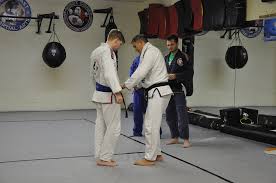
Rules, weight classes, and substance bans all strive to equalize fighting conditions in grappling competitions. But one import determinant for success that organizations can’t control is time spent training. Ambitious BJJ practitioners should arrive first, leave last, and attend classes with extreme regularity. Life will always attempt to interfere with training. It’s up to the athlete to make sacrifices order to prioritize training. Just train intelligently and listen to your body to defend against injury and burn out.
Envisioning
Practice shouldn’t end when practitioners leave the mat. Whether its arm dragging metal railings on the public bus or fighting a friend for wrist control, the movements, combined with a little imagination, become directly applicable to grappling. Envisioning sequences without physical movement also provides a useful exercise. Being able to accurately envision the details of a technique enhances the grappler’s ability to both assimilate information gleaned in the last training session and to execute the techniques fluidly at the next training session. If, during the mental exercises, the practitioners cannot envision certain movements, it creates an area of focus for the next session.
Improvement will Come
Improving, let alone improving quickly, in BJJ takes hard work. The above creates a basic framework to facilitates rapid improvement. Over time you will adopt progressively more ‘advanced’ mindsets. The exact rate of development, of course, depends on a myriad of factors, not least of which is the individual and the instructor. But with dedication and conviction, the improvements will come. What helped your improve? Let me know in the comments!

 The Conflict Archaeologist