In antiquity, techniques to incapacitate an opponent without weapons rapidly emerged both as a form of hand-to-hand combat to use on the battlefield and in athletic competitions. The emergence of the panhellenic games of Greece greatly enhanced the prestige awarded to athletes who participated and contributed to the continued popularity of combat sports during the Roman period that followed. By learning more about the ancient forms of boxing, wrestling, and pankration, our understanding of their modern deviations can be enhanced.
TABLE OF CONTENTS
Pankration in Antiquity
The completion of techniques used by modern mixed martial artists forms extremely effective systems of hand-to-hand combat. Created by assimilating the most functional aspects of other martial arts, MMA indiscriminately relays on wrestling, striking, takedowns, chokes, leg-locks, and other joint-locks to overpower opponents. But is the concept of this ‘complete fighter’ a modern phenomenon?

Pankration, meaning ‘all-power’, was an ancient Greek martial art first used by hoplite warriors on the battlefield. According to the ancient writer Philostratus, pankration employed grappling and striking in equal measures. Ancient historians have recorded several likely instances where Greek fighters relied on pankration in war. Herodotus, for instance, describes the Greeks at Thermopylae during the second Persian invasion in 480 BCE relaying on unarmed combat to continue fighting once their weapons had shattered.
After being introduced into the Panhellenic games in 648 BCE, Philostratus writes that only two limitations were added for participant safety: no eye gouging or biting. Archaeological evidence has verified the existence of a wide range of techniques familiar to modern mixed martial artists, including knee-bares, heel-kicks, and one-legged take-downs. The martial art consisted of both upright fighting and ground fighting and pankrationists would also frequently compete, like MMA fighters today, in wrestling and boxing.
Similar to the early days of the UFC, pankration competitions were not constrained by weight divisions. The fights ended, since no time limitation existed, only when a contestant surrendered, fell into unconsciousness, or breathed his last. Numerous instances document the brutality of pankration. Pausanias writes of a particularly violent encounter where the fighter Damoxenos pulled out the entrails of his opponent Creugas. After the gruesome incident, the Greeks were forced to institute an additional rule forbidding the ripping out of internal organs.

In 393 CE the Roman emperor Theodosius outlawed pagan festivals along with pankration. As the number of practitioners declined, the techniques developed and refined from over a 1000 years of use began fading from memory. Researchers, however, have started reconstructing the combat sport based on literary evidence, archaeological remains, and practical applications.
Jim Arvanitis and Aris Makris, both of Greek descent, have worked to reintroduce the martial art into public consciousness. Similarity, scholars like Andreas Georgiou and E. Norman Gardiner have also combined studies on literature, epigraphy, and archaeology to research pankration. As a result of modern efforts, pankration gyms, tournaments, confederations have again emerged around the world.
Wrestling in Antiquity
Wrestling is a popular combat sport in the many western cultures. Within MMA organizations like One Championship and the UFC, fighters with strong background in wrestling have dominated the competition, including famous fighters like Ben Askren and Randy Couture. Acceptable practices in ancient wrestling, however, diverged significantly from most modern counterparts. Ancient wrestling included many submission grappling techniques, such as joint-locks, strangulations, and limited striking.
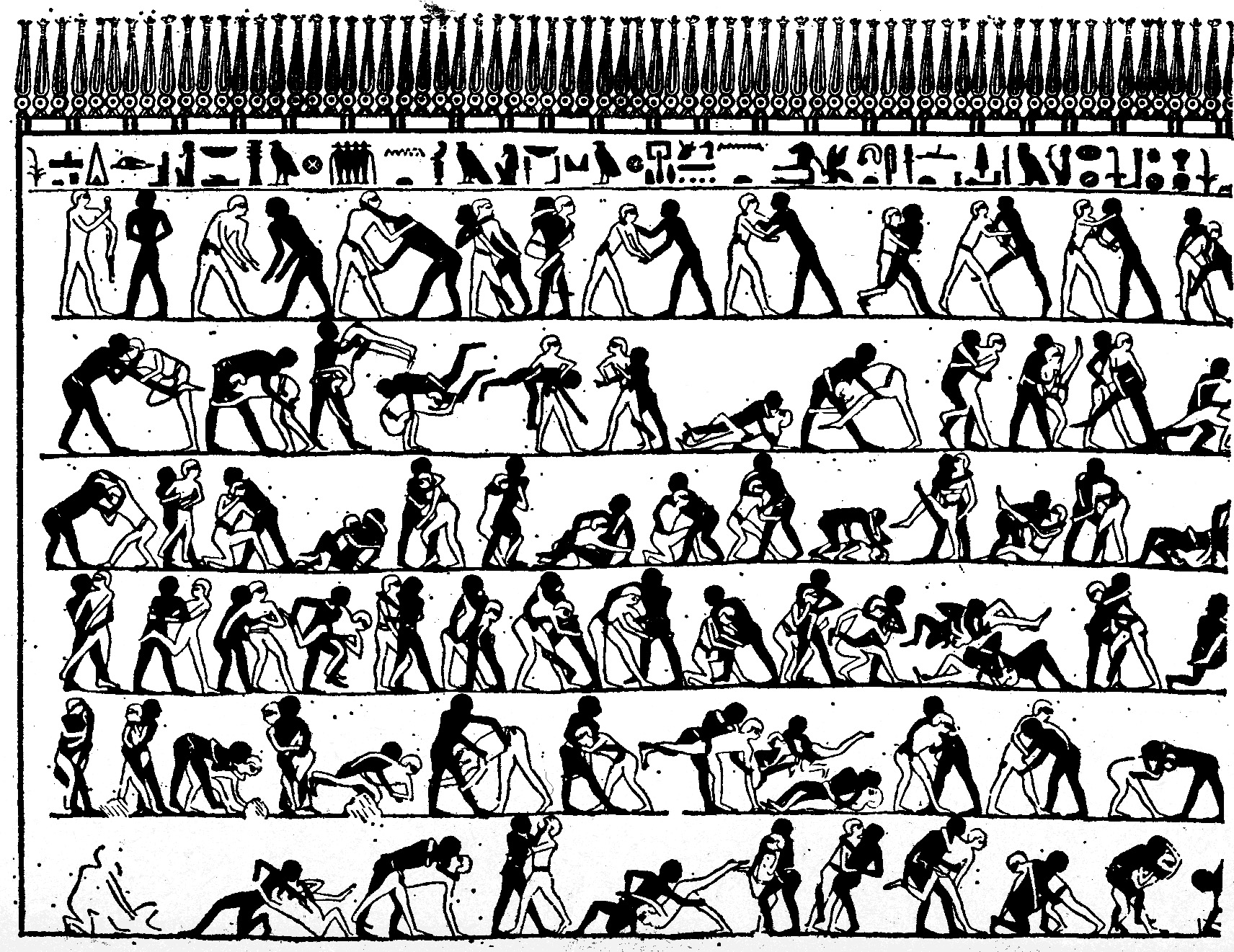
The earliest literary records of wrestling date back over 4,000 years ago to the Epic of Gilgamesh in ancient Mesopotamia. Likewise, ancient Egyptian and Greek archaeological evidence, notably the famous wall paintings of Beni Hasan, point to a long-standing fascination with the grappling arts. The functionality of wrestling meant western cultures implemented the holds, transitions, and takedowns into both military training and competition sports. The Homeric Iliad, for instance, describers in detail the wrestling match between Greek hero’s Odysseus and Ajax at Patroclus’ funeral games.
The oldest of the ancient Greek combat sports, wrestling was first introduced into the famous Panhellenic games in the 8th century BCE, well before the inclusion of Boxing or Pankration. In official matches, wrestlers were required to score three points to win. The ancient authors Nonnus and Lucian explain how submitting your opponent with a strangulation or a joint lock was considered as legitimate as pushing an opponent out of boundaries, immobilizing him with a hold, or forcing his shoulders to the ground. According to an inscription found at Olympus, a new rule was instituted banning small joint manipulation after wrestlers like the famous Sostratus of Sicyon began over-exploiting finger breaking,
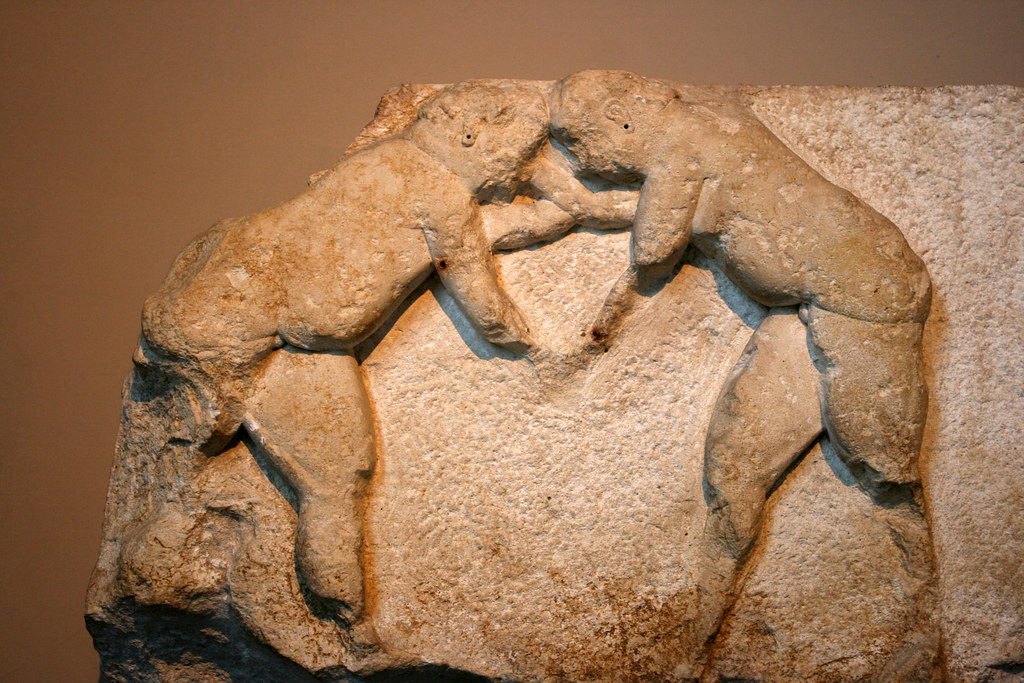
Wrestling included both ortho pale, or standing wrestling, and kato pale, or ground fighting. As depictions on pottery and wall painting illustrate, the takedown techniques used during the ortho pale phase relied on both upper and lower body grips. Some fighters earned the coveted title of ‘akoniti’, or ‘dustless’, because of their ability to defeat their opponent without falling. An inscription attributed such a victory to Tiberius Claudius Marcianus because his opponents would withdraw from competition simply upon seeing him naked.
The open weight classes meant wrestling styles varied greatly. Some fighters emphasizing light movements to trip their opponents, while others relied on weight and power to send their opponents crashing to the ground. Through dedication and constant training, wrestlers strove to overcome their opponents effectively and decisively. The dynamic movements and powerful techniques exhibited used in wrestling, past and present, have cemented its fearsome reputation as a combat sport.
Boxing in Antiquity
Recently, mixed martial artists with a background in western boxing, like Conor Mcgregor, Alexander Gustafsson, and Amanda Nunes, have risen to prominence. Like grappling, a standalone specialism of striking can be devastatingly effective in its own right. From ancient times to modern, the punching capabilities of trained boxers have become synonymous with accurate and powerful striking.
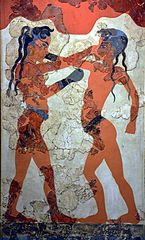
The earliest depictions of boxing uncovered by archaeologists come from Mesopotamian tablets dating back to around the third millennium BCE. Later reliefs from the Egyptian, Mycenaean, and Minoan civilizations likewise provide physical evidence of boxing’s widespread use in antiquity. Although possible evidence of wrist supports have been identified in earlier Mesopotamian terracotta, more developed hand protection first appears in the Minoan archaeological record around 1500 BCE.
The ancient Greeks held boxing in high esteem and from the days of Homeric literature frequently participated in boxing bouts along with wrestling. After being introduced into the PanHellenic games in 668 BCE, Plutarch notes that clinching, scratching, or biting were forbidden. The matches, similar to pankration, were not constrained by weight classes. Since no time limitation existed, the fight ended only when a contestant surrendered, lost consciousness, or died. An account by Lucillus attests to the disfiguring effects of ancient pugilism by describing how a boxer’s unrecognizable post-fight appearance kept him from obtaining his inheritance.
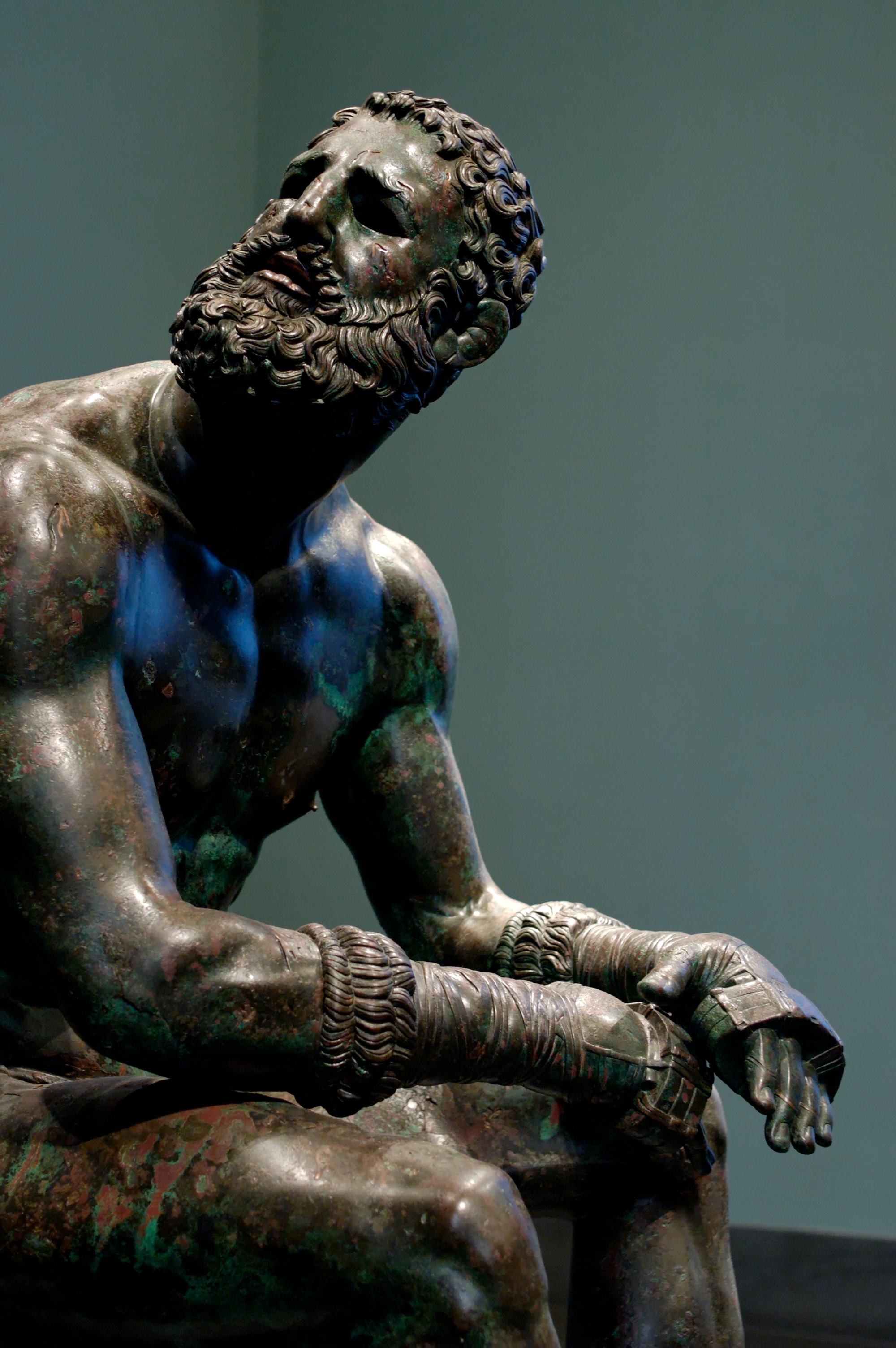
Ancient Greeks, according to Plutarch and Plato, tended to wear varying degrees of soft or hard leather thongs around the hands, wrists, and sometimes forearms. Like modern MMA gloves, the thongs allowed boxers to open and close their hands during a match while still providing a degree of protection to the wearer’s hands. As Virgil relates, the Romans often sewed metal into the leather gloves to essentially create knuckledusters. The brutality and lethality subsequently increased significantly.
The Roman emperor Theodoric the Great banned boxing around 393 CE because he believed the disfiguring effects were insulting to God’s image. Nonetheless, boxing continued as a combat sport throughout most of the empire. Ancient boxing created the framework for pugilism in the medieval era and beyond, eventually developing into the western boxing of modernity.
About the Author

Michael van Ginkel
Armed with a master’s degree in conflict archaeology and heritage, I’ve researched and excavated sites of conflict across the globe. I actively train and compete in grappling, the oldest combat sport in history



License & Copyright
The copyright holder has published this content under the following license: Creative Commons Attribution-NonCommercial-ShareAlike. This license lets others remix, tweak, and build upon this content non-commercially, as long as they credit the author and license their new creations under the identical terms. When republishing on the web a hyperlink back to the original content source URL must be included. Please note that content linked from this page may have different licensing terms.

 The Conflict Archaeologist